
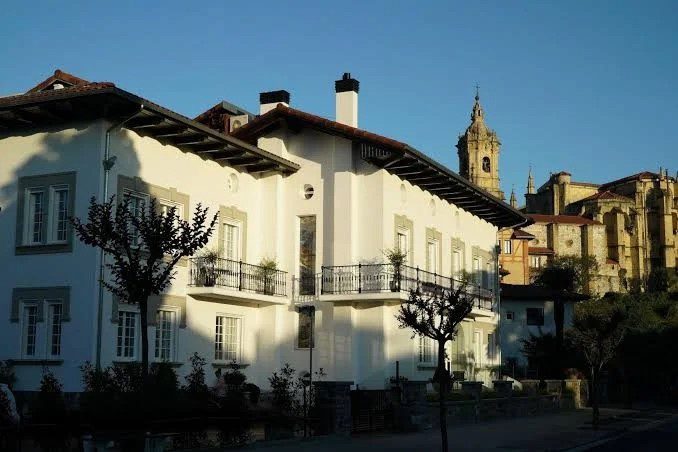
Comprehensive renovation of the Hotel Villa Magalean
The project includes the comprehensive rehabilitation of the building originally named as Villa Albertina, located in Nafarroa Behera kalea nº 2, Hondarribia, within the urban area AIU “30. Bretxa Azpia”, characterized by a garden city typology, building isolated y under development. The performance takes place on a existing detached villa on plot, located in a well-established residential area.
The intervention proposes the change of use from the building, passing from single-family home a hotel establishment, compatible with the current urban planning regulations. The project proposes a comprehensive rehabilitation, which includes the conservation and adaptation of the main facade, the partial demolition of existing elements and one volumetric expansion intended to fill the permitted building use.
The new building is organized into semi-basement floor, ground floor, first floor y floor below roof, incorporating height growth that allows it to meet the regulatory requirements for hotel tertiary use, especially in relation to free heights, accessibility y functional conditions. The program hosts a total of 8 rooms, all of them with en-suite bathroom, distributed on the upper floors, along with common and service areas.
The semi-basement floor welcomes the auxiliary uses, as laundry, changing rooms, warehouses, support kitchen, store y gym, in addition to the service access. In ground floor are located reception areas, living-dining room, accessible toilets y adapted rooms, with a direct connection to the outdoor terraces and landscaped areas. The upper floors concentrate the rooms, articulated by means of a vertical communication core with ladder, elevator y lift.
From a construction point of view, the project incorporates a new reinforced concrete structure, complemented with wooden structure on roof, and a foundation using a monolithic slab. The thermal envelope it is resolved by SATE systems, insulated interior wall linings y ventilated pitched roof, guaranteeing compliance with Technical Building Code in the matter of thermal insulation, acoustic y energy efficiency.
The building facilities They are completely renovated, incorporating systems of air conditioning, ventilation, domestic hot water, solar energy backup, fire protection y universal accessibility, according to the specific regulations for hotel establishments. The exterior finishes maintain the original architectural character of the property, with solutions in keeping with the environment and a careful landscape integration of the plot.
The result is a project that combines architectural rehabilitation, technical update y functional adaptation, transforming an existing building into a contemporary hotel establishment, fully integrated into the urban fabric of Hondarribia and aligned with current regulatory and comfort standards, known today as Hotel Villa Magalean.
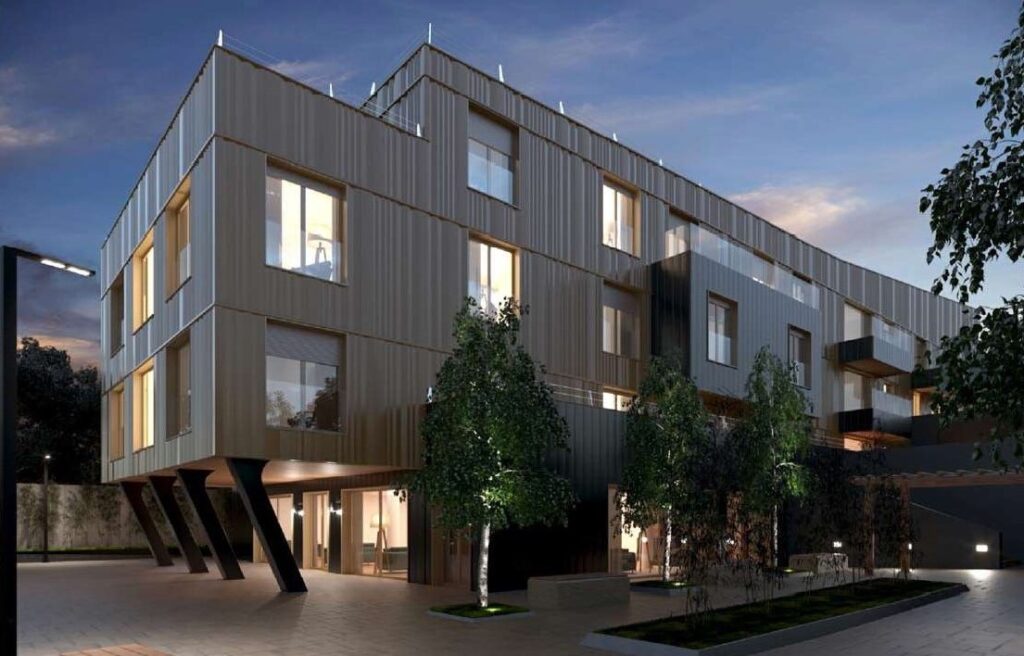
Villa Elvira Senior Residence
The project includes the implementation of a new residential center for the elderly in the Intxaurrondo street nº 38 in Donostia–San Sebastián, in a parcel located between Intxaurrondo street itself and the Txaparrene Promenade, in a consolidated urban environment and well connected. The action takes place in an area with a marked topographic slope, a condition that has been decisive in the volumetric configuration y functional of the building.
The intervention proposes the construction of a residential care building, designed in accordance with the criteria established by the municipal urban planning regulations and the Specific regulations for residential centers for the elderly in the Autonomous Community of the Basque Country. The new equipment It houses a total of 49 places, organized in cohabitation units distributed in three floors above ground, guaranteeing a high percentage of single rooms and prioritizing the spatial quality, the universal accessibility and the comfort of the users.
The building is structured in two floors below ground intended for parking, facilities y general services, and three upper floors that concentrate the residential areas y common areas. The functional organization clearly distinguishes the public, private and service routes, optimizing the center operation and reinforcing the security and the access control. All the living spaces They have natural lighting y natural ventilation, and extensive living and social areas, so much interiors as exteriors.
From the point of view formal, The project proposes a unit volume adapted to the topography, with a implantation parallel to longitudinal axis of the plot. The building envelope it is resolved by ventilated facade y durable, low-maintenance finishing materials, combined with a regular rhythm of gaps which responds to interior functional program. The flat cover integrates the technical facilities, including energy generation systems, preserving its visual impact.
The set is completed with gardens and outdoor spaces oriented to south, conceived as walking and recreation areas, reinforcing the relationship of the building with its surroundings and contributing to well-being of the residents. The project thus opts for a contemporary residence model, functional and fully integrated into the urban fabric from Intxaurrondo.
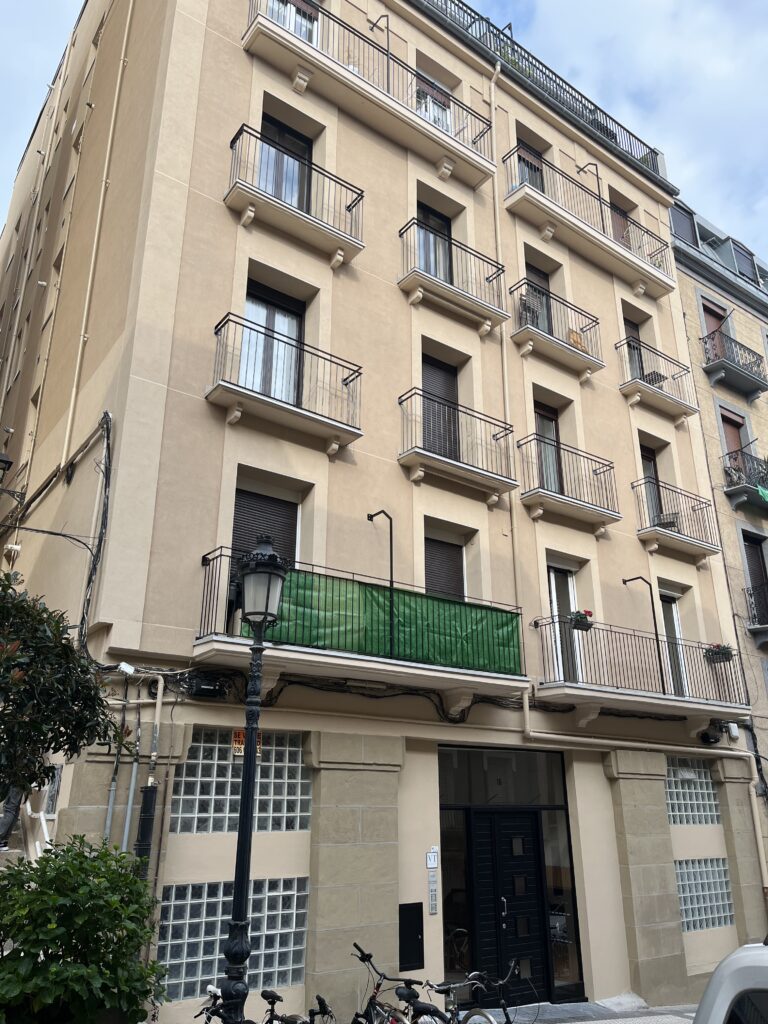
Rehabilitation of the building envelope in C. Salud
The project includes the comprehensive rehabilitation of the thermal and structural envelope of an existing residential building, located at 16 Fuente de la Salud Street, in the Ensanche area of Donostia-San Sebastián. The building, constructed in 1920 and consisting of a ground floor and six floors above ground, presented construction and energy deficiencies detected in the Building Technical Inspection.
The intervention acts on exterior facades, recessed facades, light well, roofs, terraced roofs and ground floor slab, without altering the use or the load-bearing structure of the building. The main objective is improve the energy performance, airtightness and durability of the building envelope, as well as correcting existing pathologies related to dampness, cracks and detachments.
The project includes the installation of a External Thermal Insulation Composite System (ETICS) The project includes facades with varying thicknesses depending on the area, complete roof renovations using new insulation and waterproofing systems, and thermal insulation of the floor slab separating the ground floor from the apartments. It also includes replacing energy-inefficient windows and doors and upgrading safety features on balconies.
The intervention justifies compliance with Technical Building Code, in particular the basic documents relating to energy saving, health, safety of use and safety in case of fire, as well as the Municipal Energy Efficiency Ordinance of Donostia-San Sebastián.
The result is a building more energy efficient, comfortable and protected from the elements, extending their useful life and improving the living conditions of the homes, all through an intervention compatible with the existing architecture and the consolidated urban environment.
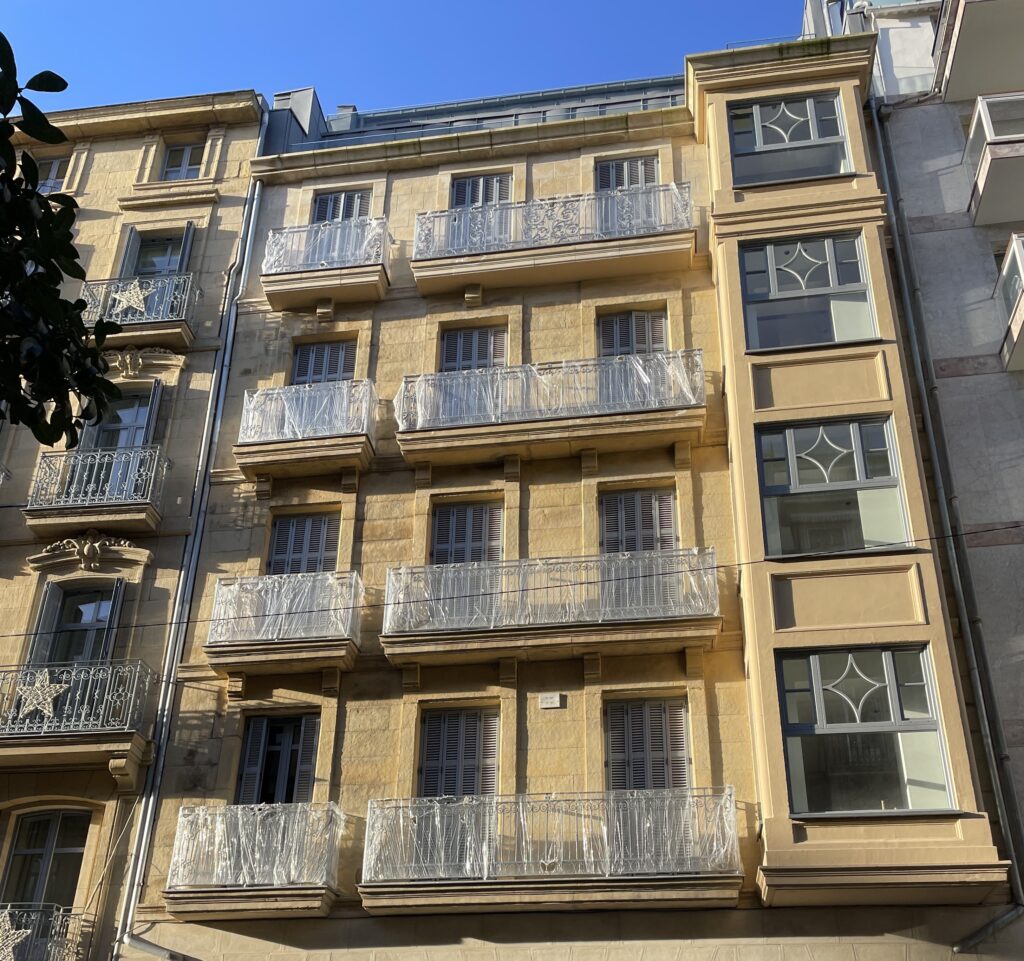
16 homes in C. Fuenterrabia
The project addresses the comprehensive rehabilitation of a Multi-family building between party walls located in the Fuenterrabia Street No. 22, in the middle urban expansion of Donostia–San Sebastián, within a consolidated environment and with asset protection. The project is being carried out on a listed building. Level D protection by the Special Plan for the Protection of Urban Heritage, which has decisively influenced the intervention criteria.
The proposal includes the complete emptying of the existing building, maintaining and comprehensively rehabilitating the protected facade, and the subsequent structural and functional reconfiguration of the complex to house 16 new homes, a commercial premises on the ground floor y auxiliary uses in basement. The project adapts the property to the current regulatory requirements in the matter of habitability, accessibility, security y energy efficiency, while preserving the architectural values of the original building.
The new building is organized into seven floors above ground —including recessed attic and attic floors— and a basement level, optimizing the plant layout through a vertical communication core which acts as an organizing element and minimizes the residual spaces. The apartments are designed with compact functional programs, prioritizing the natural lighting, the ventilation and the relationship with the block courtyard, where they are arranged terraces and communal outdoor spaces.
From a construction point of view, the project incorporates a new reinforced concrete structural system, a improved thermal envelope and solutions acoustic and energy insulation in accordance with Technical Building Code. The façade is preserved in accordance with the criteria of the protection regime, while the new envelopes are resolved by isolated facades, ventilated roofs y joinery with thermal break, ensuring control of energy demand.
The building facilities They have been designed using criteria of efficiency, incorporating systems of aerothermal energy, high-efficiency air conditioning, Mechanical ventilation with heat recovery y individualized control per dwelling, contributing to thermal comfort and the reduction of energy consumption during the building's useful life.
The result is a project that combines heritage rehabilitation, architectural renovation y technical update, integrating the building into the existing urban fabric and providing it with a new contemporary residential use, aligned with current market demands and current regulatory standards.